When people think about developing custom packaging, they often imagine the process starts with drawings, specifications, or detailed production files.
In reality, that isn’t always the case.
Many projects begin with nothing more than an idea.
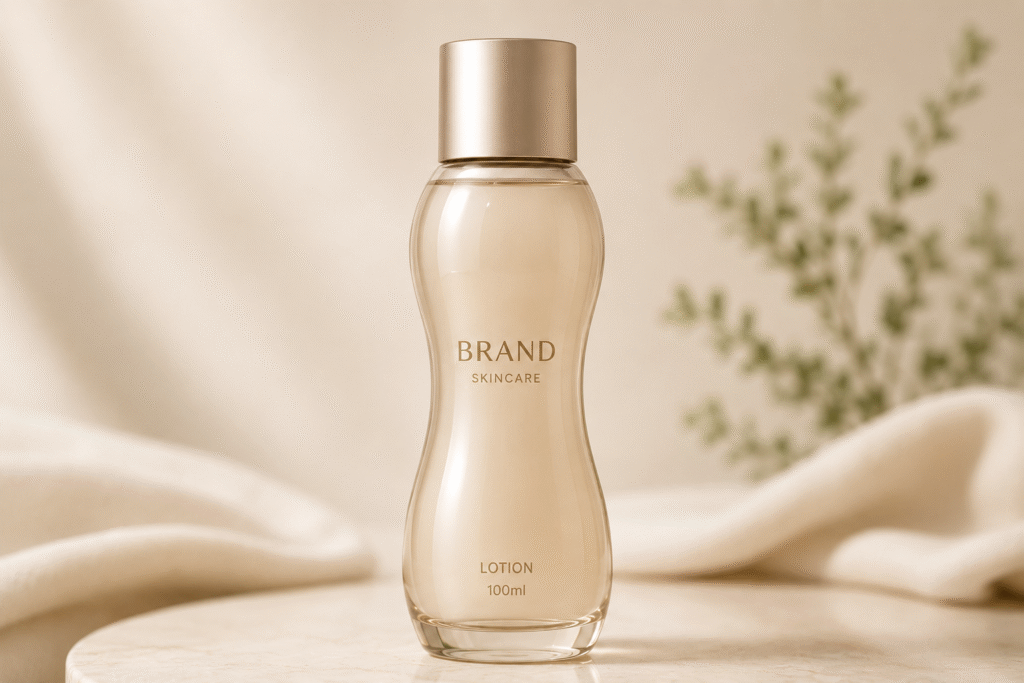
Recently, I worked on a skincare packaging project where the client shared an AI-generated concept image of the bottle they envisioned. It clearly communicated the style they wanted, but it wasn’t something that could be sent directly to a factory for production.
There were no technical drawings, no Pantone references, and no engineering details.
Just an idea.
For me, that was enough to start.
The First Question Wasn’t “Which Factory?”
When a project is still at this stage, I don’t think the first question should be, “Which factory can make this?”
Instead, I think the first step is understanding what is actually possible.
An AI-generated image is a great way to communicate a design direction, but it doesn’t necessarily represent a product that already exists or can be manufactured exactly as shown.
So before discussing production, I wanted to understand what realistic options were available.
Exploring Possible Options
After reviewing the concept, two possible approaches became clear.
The first was to develop a completely new mold to reproduce the design as closely as possible.
The second was to identify existing bottle styles that captured a similar visual direction without requiring custom mold development.
Each approach had its own advantages and trade-offs.
Custom mold development would provide greater design freedom, but it would also involve additional tooling costs, longer lead times, and higher minimum order quantities.
Using an existing bottle could reduce development time and cost, while still achieving a look that was close to the original concept.
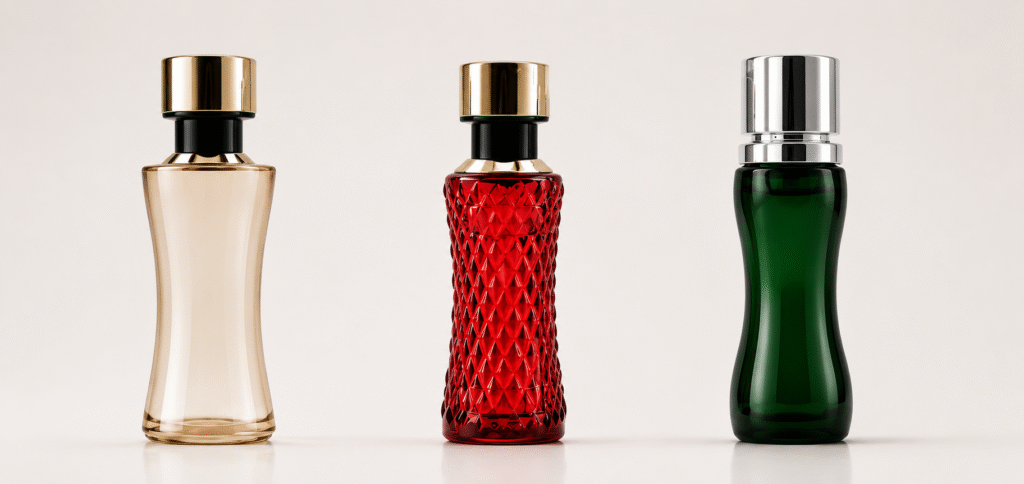
Rather than recommending one solution immediately, I presented both options side by side.
I prepared reference images of suitable bottle styles, estimated pricing, MOQ requirements, lead times, and explained the practical implications of each approach.
The objective wasn’t simply to choose a bottle.
It was to give the client enough information to make an informed decision.
After reviewing the alternatives, the client decided to move forward with one of the existing bottle styles.
Although it wasn’t an exact copy of the AI concept, it offered the best balance between appearance, development cost, and timeline for this particular project.
Reducing Uncertainty Before Sampling
Once the bottle had been selected, the project moved into the sampling stage.
Normally, I would recommend reviewing an existing bottle sample before investing in customized sampling.
Holding the bottle in hand allows clients to evaluate its proportions, material, finish, and overall feel before making further decisions.
For this project, however, the client preferred to proceed directly with customized samples.
Without that physical review, there was naturally a little more uncertainty.
To reduce that as much as possible, I shared detailed photos, videos, dimensions, and other visual references of the selected bottle before sampling began.
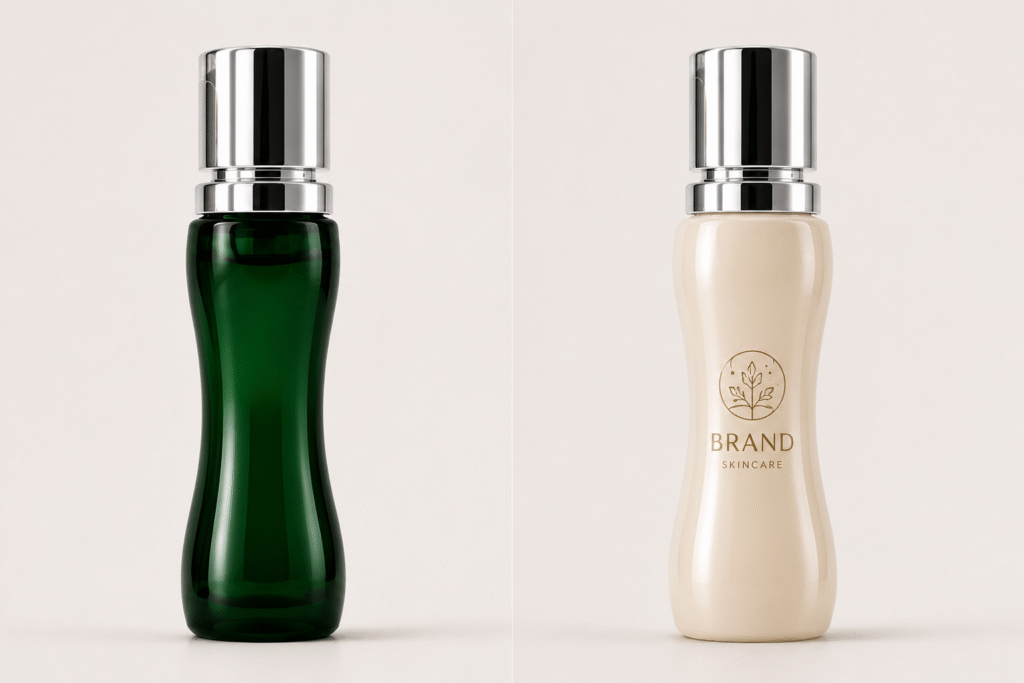
I also prepared visual mockups showing the client’s artwork on the bottle.
The purpose wasn’t to replace a physical sample.
It was to make sure we were visualizing the same product before moving forward.
Turning Design Into Production Information
One of the final details we needed to confirm was color.
The artwork showed the desired color direction, but the factory couldn’t produce a color based solely on a digital image.
A physical color reference or a Pantone reference was needed.
Since neither had been provided, I compared the artwork against several Pantone options and shared the closest matches with the client.
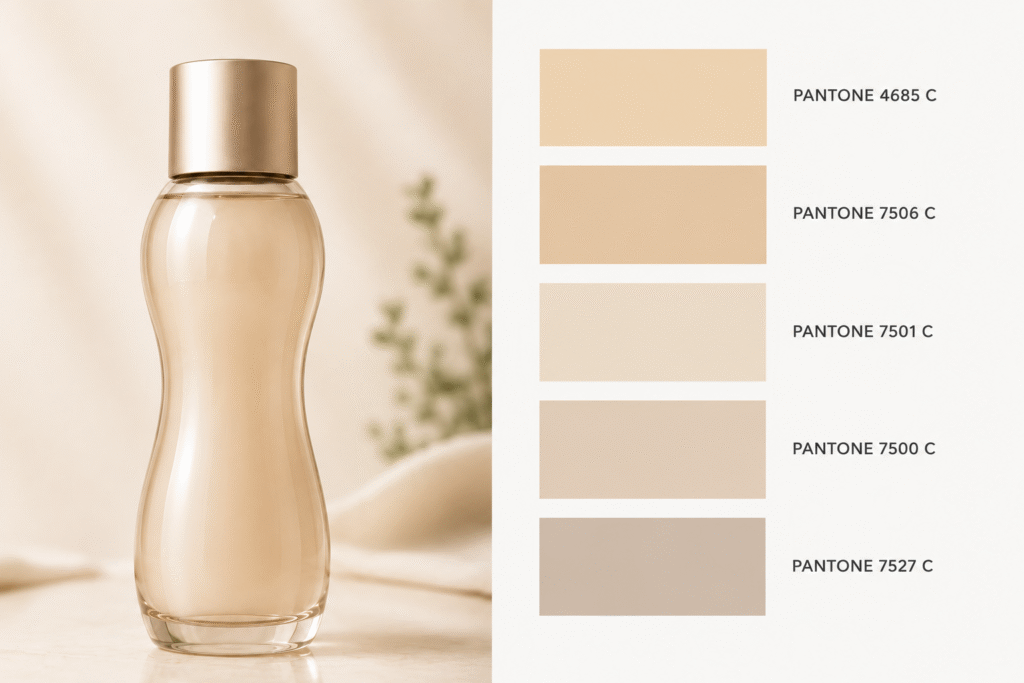
Once the preferred color had been confirmed, the artwork, bottle selection, and production requirements were finally aligned.
The project was then ready for customized sampling.
After the sample was approved, production moved forward and the order was recently shipped.
Looking Back
What I like about this project is that it reflects how many packaging projects actually begin.
Not with perfect production files.
But with an idea.
Between that initial idea and the finished product, there are often many small decisions to make.
Should an existing product be used?
Is custom mold development worthwhile?
How should colors be confirmed?
How can expectations be aligned before sampling?
None of these decisions are particularly complicated on their own, but together they shape the direction of the entire project.
In this case, step by step, an AI-generated concept became a practical packaging solution that could actually be manufactured.
If you’re exploring a custom packaging idea and aren’t sure what the best approach might be, I’d be happy to discuss the options with you.